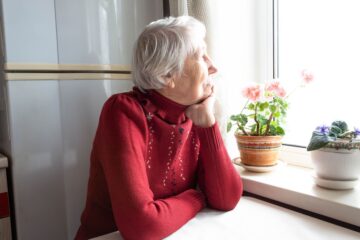
Loneliness can be difficult to witness, and just as difficult to experience yourself.
Someone can have a beautiful home, a loving family and people who care about them, and still feel very alone. It is not always about being on your own. It is about missing the conversations, familiar faces and little moments of connection that make life feel full.
We all need time to ourselves, and choosing to be alone is not the same as feeling lonely. But when that feeling becomes part of everyday life, it can have a real impact on someone’s health and wellbeing.
You may have heard loneliness compared to smoking. It is a striking comparison, but there is a reason it has been made.
Why is loneliness compared to smoking?
The US Surgeon General’s 2023 advisory on social connection highlighted research suggesting that lacking social connection is associated with a risk of premature death comparable to smoking up to 15 cigarettes a day.
It is important to understand what that comparison means. It does not suggest that loneliness affects the body in exactly the same way as smoking, or that feeling lonely is the equivalent of smoking a particular number of cigarettes. It is a way of showing just how significant our connections with other people can be to our health.
And it is not just a concern for older people. The World Health Organization’s 2025 report on social connection found that around one in six people worldwide experience loneliness. Its effects can be felt across all ages, with links to conditions including heart disease, stroke, depression and anxiety. These figures are a reminder that connection is not simply a nice extra. It is an important part of feeling well, both physically and emotionally.
When someone’s world gradually becomes smaller
For many older people, loneliness does not happen all at once. It can creep in gradually, often following changes that are difficult to avoid. Retirement, bereavement, reduced mobility, illness, stopping driving or moving away from familiar surroundings can all change the shape of someone’s day.
A lunch with friends might become harder to arrange. A trip to the shops might feel like too much effort. Hobbies that once brought people together can quietly fall away.
And before long, there may be fewer reasons to leave the house, fewer conversations and fewer familiar faces.
None of these changes means that someone will necessarily feel lonely. But they can make it harder to stay connected, particularly when several happen at once. If you’re concerned about someone, our guide to signs of loneliness in older people explains what families can look out for.
It is worth asking what they miss. Is it seeing a particular friend? Going to their favourite café? Getting out for a walk? Sometimes the answer is much simpler than we might expect. signs of loneliness in older people explains what families can look out for.
The little things that help us feel connected
There is no single answer to loneliness, and it is not always about arranging more activities or filling someone’s diary.
Often, it is about finding ways to bring back the things that make someone feel like themselves.
It might be a regular visit from a familiar face, a walk around the neighbourhood, a trip to the shops or simply having someone to sit with over a cup of tea. For someone who has always enjoyed gardening, it might be making time to get outside. For someone who loves their local area, it could be a visit to a favourite café. And for someone who misses their usual routine, having a little help to get out and about can make all the difference.
The important thing is that these moments are meaningful to the person. They should start with what someone enjoys, rather than what we assume they ought to be doing.
Making space for connection at home
At PillarCare, we believe good care should fit around someone’s life, not the other way around.
That means looking beyond the practical tasks and understanding what makes a day feel like a good day for each individual.
For some people, it might mean having breakfast together and a proper conversation before the day begins. For others, it could be a walk with the dog, a visit to a familiar place or help with an appointment they would otherwise struggle to get to.
Our concierge-style approach to care is about making room for these things, as well as providing practical support. It is about helping people stay connected to the places, people and routines that matter to them.
Care cannot replace family, friends or the relationships that have been part of someone’s life for years. But the right support can make it easier to maintain those connections and continue enjoying the everyday moments that matter.
Because sometimes, a cup of tea and a little company are about much more than a cup of tea.